Dyslexia doesn't stop after school
What it's like being a dyslexic adult in tech, what actually helps, and why the support seems to end when you leave school.
I was diagnosed with dyslexia in 2004, in the severe range. Back then there was help: assessments, extra time in exams, people who knew what dyslexia was.
Then you leave school, and it mostly stops. The dyslexia doesn't.
How I got here
I didn't take the obvious route. I left school in third year, before my Junior Cert. A big reason was my anxiety about the exams, and the bully inside my head telling me I was just too dumb for this.
At 15 I started an electrician's apprenticeship. I loved the problem-solving side of it. I'm good with my hands, and I learn by doing. Around then I found the text-to-speech on the Mac. With it, I could read and take things in so much better than before that I taught myself to code and hack.
Then my mum died. I wanted to prove something to myself, and to do it for her. I went back to education, did my Leaving Cert, then Computer Science at UCD. I've been a software and platform engineer ever since, including six years at Microsoft.
I'm saying that because people still hear "dyslexia" and think it means something about intelligence. It doesn't. It means my brain works differently. Some things are harder for me, and some things are easier.
It rarely comes on its own
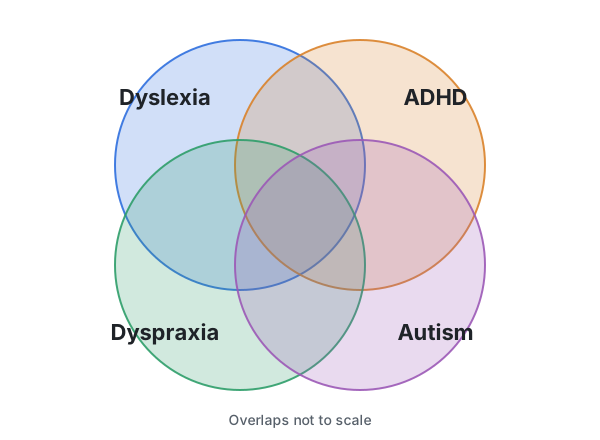
Dyslexia, ADHD, autism and dyspraxia overlap a lot. Many people have more than one. One twin study found that children with dyslexia were more than eight times as likely to have another neurodevelopmental condition as other children.
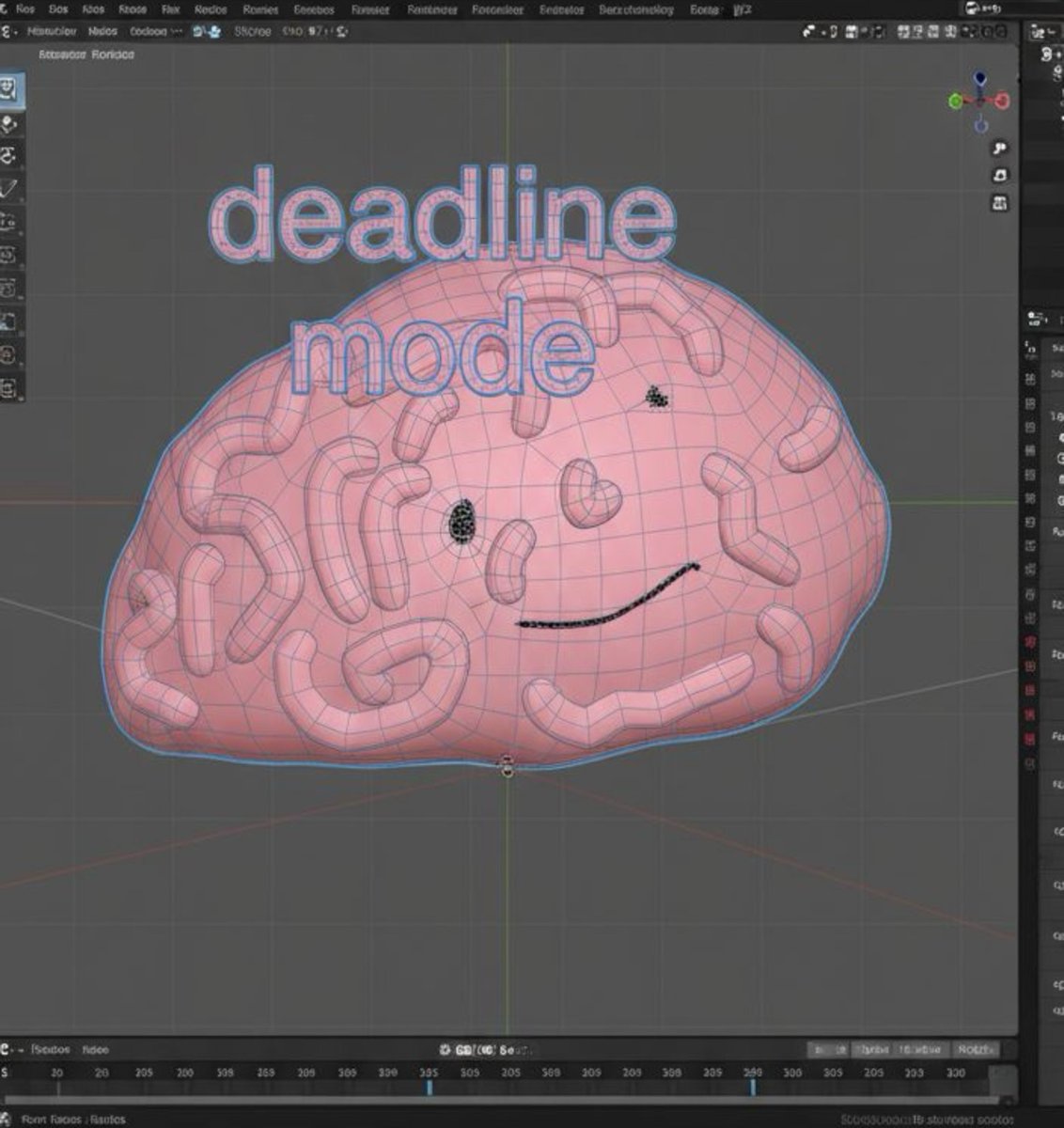
My 3D take on deadline mode by digitallybaffled.
Deadlines are a good example. My brain often only really gets going under the pressure of a deadline. People link that with ADHD, but it's part of dyslexia for me too. digitallybaffled sums it up well in this short: deadline mode.
But dyslexia gets talked about far less. When people talk about neurodiversity, they mostly mean ADHD or autism. Dyslexia gets treated as "just a reading thing" that school sorted out. For me, it affects daily life as much as any of them. It's in every email, every form, every meeting.
What's hard
- Reading and writing a lot, fast. Long documents, dense emails and writing specs take me more time and more energy.
- Working memory. If you tell me five things in a meeting, I'll lose some.
- Being put on the spot. Being asked to read something out, or answer in writing straight away, is the worst version of my day.
- Phone calls. Mostly anxiety. I'd always rather do it by email.
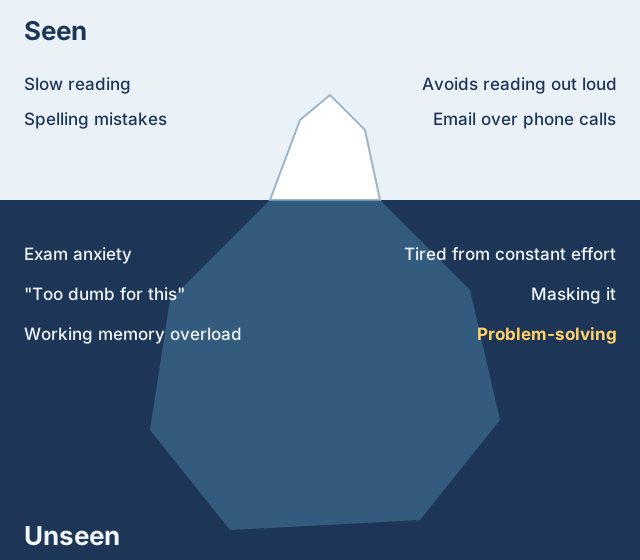
Most of it is under the surface. People see the spelling. They don't see the effort.
What helps
None of this is complicated or expensive:
- Recorded meetings or written notes, so I can go back over things.
- Text-to-speech and good tools. Screen readers, spell checkers and AI tools have honestly changed how I work. I used AI to help me write this post, too. That's the point.
- Time. Not lots of it. Just not being judged for working my own way.
- Letting me work by doing. I understand a system by building and breaking it, not by reading about it first.
- Email over phone, wherever possible.
Years ago I wrote to a dyslexia charity, and one line from that email ended up in their booklet:
One of the most important accommodations for me is a supportive work environment that understands my need to work differently.
I still think that's the whole thing. Tools help, but the environment matters most.
The gap
Here's the part that frustrates me. As a kid, other people organise the support. As an adult, it's all on you. You have to:
- decide whether to tell an employer, and when
- explain what dyslexia is, again
- ask for accommodations, often more than once
- chase it when nothing happens
And there's very little help with that. Most dyslexia support in Ireland is built around children and exams. There are very few advocates for adults at work, and not many employers understand it.
What I'd say to employers
- Ask what helps, then do it. Most of it costs nothing.
- Reply in writing. If someone asks for accommodations in writing, answer in writing.
- Don't treat it as a performance problem. Working differently isn't working worse.
What helped me feel less alone
A book I'd recommend: Dyslexia Explained by Dr Jacob Santhouse. I listened to the audiobook. He's a counsellor and dyslexic himself, and he makes great short videos about dyslexia on TikTok, Instagram and YouTube.
They helped me feel less alone. Dyslexia affects people in ways most others wouldn't think of, and it was a relief to hear someone describe things I thought were just me.
What I'd say to other dyslexic people
You're not stupid, and you're not alone. Write things down, keep copies of what you ask for, and use every tool that helps. It isn't cheating.
I've started asking for accommodations in every interview process now. It used to feel like a risk. Now it feels like a good test of whether a place is right for me.